One of the most distressing aspects of dementia and Alzheimer's care is a phenomenon known clinically as "Sundowning Syndrome." As the late afternoon light fades, many seniors experience a sudden spike in confusion, anxiety, aggression, or wandering.
This is not a deliberate behavioral issue; it is a neurological disruption. The internal body clock (circadian rhythm) in a brain with dementia is often damaged, leading to a confusion between day and night. Additionally, the cognitive fatigue of navigating the world all day leaves the brain with no "reserves" to process information by evening, leading to a state of overwhelm.
Managing the Triggers
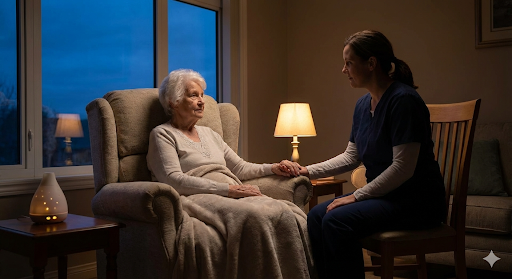
Because we cannot easily fix the pathology, we must manage the environment.
Light Therapy
Shadows can be terrifying to a mind that is misinterpreting visual input (hallucinations).
As evening approaches, turn on all the lights before the sun goes down. Keep the home bright to reduce shadows and signal to the brain that it is still safe.
Routine Reduction
The late afternoon is not the time for complex tasks or loud noises. "Environmental engineering" in this phase involves reducing stimulation—turning off the TV, playing soft music, and engaging in calming, repetitive tasks.
Physiological Maintenance
Hunger and dehydration can exacerbate agitation.
A drop in blood sugar or simple thirst can manifest as anger in a person who cannot articulate their needs due to aphasia.
The Strategy: Offer a small, healthy snack and water in the late afternoon. Avoid caffeine or sugar which can cause spikes in energy followed by crashes.
The Value of Evening Support
Sundowning is often the breaking point for family caregivers, who are themselves exhausted after a long day. This is a critical time to bring in professional support.
A caregiver can take over the "evening shift," managing the difficult transition to bedtime with patience and clinical expertise. We ensure the environment is safe, preventing the wandering that often occurs during these hours.