Is it Aging or Dementia? How to Recognize Early Warning Signs at Home
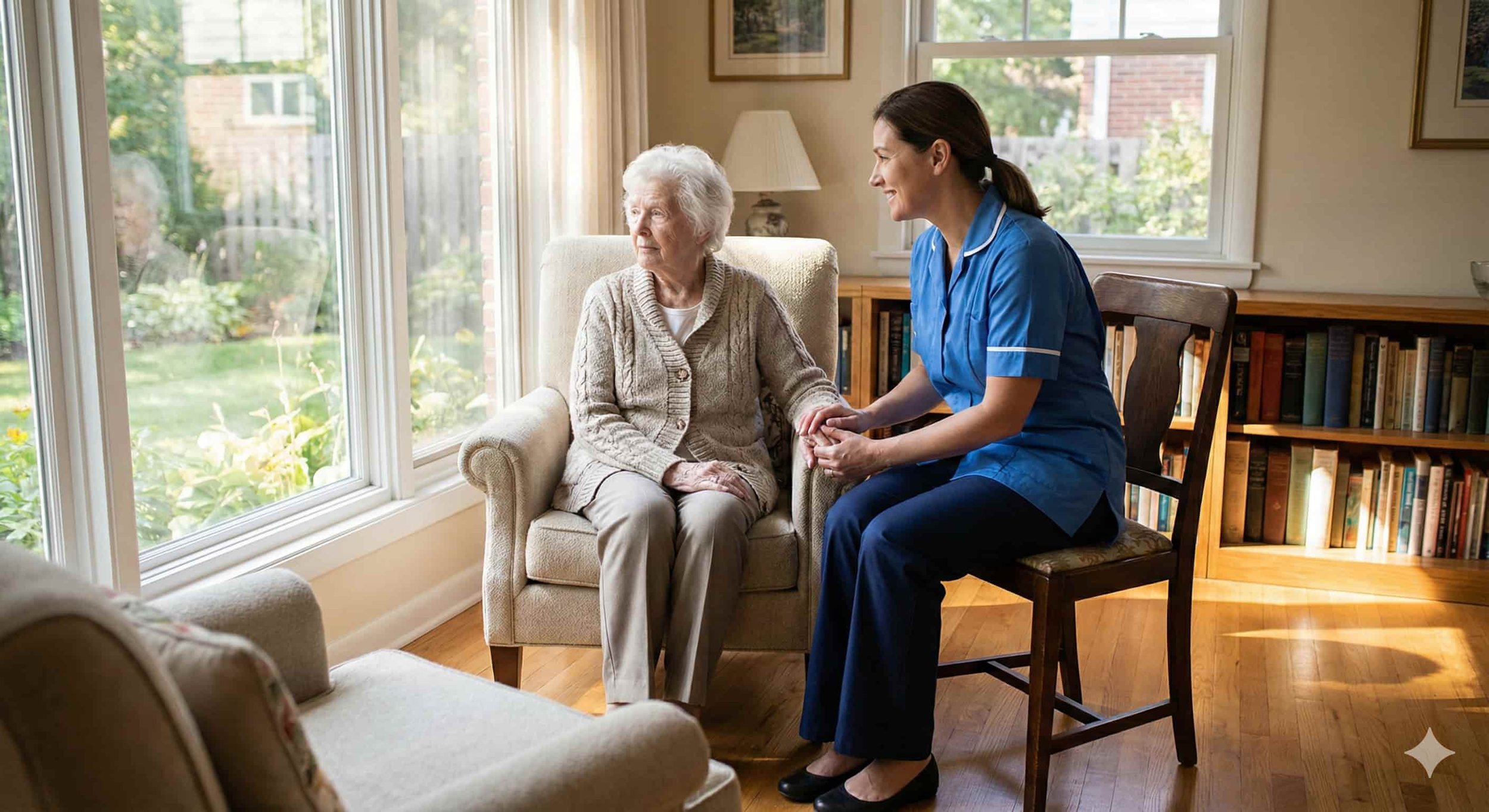
As our loved ones enter their "golden years," families often face a quiet but pervasive anxiety: Is this normal, or is it something more serious? With the global population of adults aged 65 and older expanding rapidly—a phenomenon often called the "silver tsunami"—more families than ever are navigating the complexities of aging in place.
While the goal is to keep seniors in their own homes comfortably and independently, distinguishing between the benign "senior moments" of normal senescence and the early warning signs of pathological decline is critical. Understanding this distinction can be the difference between early, effective intervention and a crisis-driven response later on.
Need specialized support? Learn more about our compassionate Dementia Care Services designed to keep your loved one safe at home.
The Clinical Distinction: Retrieval vs. Storage
To understand what is happening in an aging brain, we must look at the mechanics of memory. Current research indicates that normal aging involves structural changes, such as a slight reduction in volume in the prefrontal cortex. This leads to "age-associated memory impairment," where processing speed slows down.
In a healthy aging brain, the issue is usually a Retrieval Deficit.
The Scenario: Your father forgets the name of an old neighbor or can’t find the right word during a conversation.
The Outcome: The memory is still there; it’s just momentarily inaccessible. Later that evening, the name might "pop up" spontaneously. If he misplaces his keys, he retains the executive function to retrace his steps ("I was in the kitchen, then I went to the garage...") and locate them.
The Scenario: Information is not just hard to find; it is lost entirely.
The Outcome: Cues and reminders, which help a healthy brain, often fail to trigger recognition. If keys are lost, the individual may not be able to conceptualize the steps taken earlier in the day to find them.
Three Red Flags: When to Seek Professional Support
Beyond memory, there are specific behavioral markers that distinguish normal aging from conditions like Alzheimer's. If you observe these in a loved one, it may be time to consult a professional or consider specialized home support.
Anosognosia (Lack of Insight)
This is often the most confusing symptom for families. A healthy senior who keeps losing their glasses is often worried: "I'm losing my mind, do I have dementia?" Paradoxically, a patient with genuine dementia is frequently unconcerned or completely unaware of their deficits, even while family members are expressing alarm.
This lack of self-awareness is a clinical condition known as anosognosia.
Disorientation in Space and Time
Getting turned around in a new city is normal. However, getting lost in familiar territory—such as the neighborhood supermarket they have visited for decades—is a strong indicator of pathology.
Furthermore, losing the ability to track the passage of seasons or identify the current year suggests a disruption in cognitive anchoring that requires immediate attention.
Language and Aphasia
While we all experience "tip-of-the-tongue" moments, dementia often leads to aphasia. This manifests as frequent substitutions of inappropriate words or the invention of new ones.
You might notice a loved one regularly using vague placeholders like "that thing" or "the doohickey" because the specific noun (e.g., "remote" or "kettle") is linguistically inaccessible to them.
The Role of Specialized Home Care
Recognizing these signs does not mean a loved one must leave their home.
In fact, research suggests that aging in place can reduce cognitive disorientation and preserve a sense of identity. However, this often requires a sophisticated infrastructure of support.
At Comfort Angels Home Care, we understand that managing these symptoms requires more than just supervision; it requires empathy and clinical expertise. Our caregivers are trained to navigate the nuances of memory loss, ensuring that your loved one remains safe and dignified in their own environment.
If you are noticing these signs, early intervention is key. Establishing a routine with professional support can stabilize the environment and reduce anxiety for both the senior and the family.