The Unique Challenges of Parkinson’s Disease
Parkinson’s Disease (PD) presents a distinct set of challenges that differ significantly from other neurodegenerative conditions like Alzheimer's. While cognitive function may remain intact for longer, the physical progression—tremors, rigidity, and bradykinesia (slowness of movement)—requires a highly specific approach to home safety and personal care.
The goal of home-based management for PD is to preserve "functional independence" for as long as possible. This involves a blend of environmental engineering and physical support. The home must be adapted to mitigate fall risks, which are exceptionally high in PD patients due to gait freezing and balance instability.
Environmental Safety and Fall Prevention
Data indicates that falls are a leading cause of hospitalization for seniors, often triggering a decline that leads to institutionalization.
For a Parkinson’s patient, the home environment must be rigorously assessed.
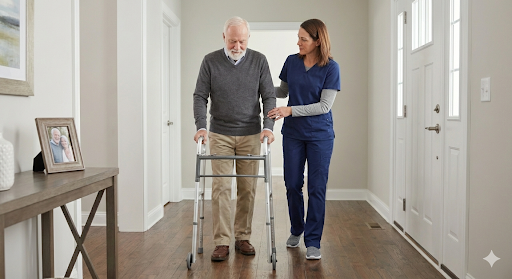
Mobility Corridors
Ensuring clear pathways to prevent tripping during episodes of "freezing."
Adaptive Strategies
Professional caregivers assist with the intricate timing of daily tasks. Because PD patients often take longer to complete movements, having a patient, trained caregiver prevents the rush-induced anxiety that often leads to accidents.
Medication Timing: The "On-Off" Phenomenon
One of the most critical operational aspects of PD care is medication management. Parkinson’s medications often have a strict efficacy window, leading to "on" periods (when symptoms are controlled) and "off" periods (when symptoms return). Missing a dose by even 30 minutes can significantly impact a patient’s ability to move or speak.
Psychosocial Support and Dignity
Parkinson’s can be socially isolating due to difficulties with speech and facial expression (masked face). This can lead to a withdrawal from social interaction. A dedicated caregiver provides the social stimulation necessary to combat isolation, engaging the client in conversation and exercises that maintain vocal strength and cognitive engagement.