The diagnosis of cancer initiates a complex journey of physiological maintenance and psychosocial adjustment. While hospitals are essential for acute treatment like surgery or chemotherapy, they are not always the ideal environment for recovery. In fact, clinical data suggests that recovering at home can significantly reduce the risk of nosocomial (hospital-acquired) infections—a critical consideration for cancer patients whose immune systems are often compromised by treatment.
The paradigm shift toward home-based care allows patients to navigate the rigors of oncology treatments within the sanctuary of their own environment. This "aging in place" model, applied to recovery, preserves the individual's sense of identity and autonomy, which can be eroded by long-term institutional stays.
Managing the "Silent Epidemics" During Treatment
Cancer treatment often brings side effects that require vigilant monitoring. Two of the most pervasive risks are malnutrition and dehydration.
Nutritional Support
Chemotherapy can alter taste buds and reduce appetite, leading to dangerous weight loss. A home caregiver plays a vital role in meal preparation, ensuring the patient receives nutrient-dense, palatable foods that support physiological maintenance.
Hydration
Dehydration is a "silent epidemic" among seniors and the ill, often exacerbating fatigue and confusion. Professional caregivers provide the gentle, consistent prompting required to maintain fluid levels, which is essential for flushing toxins from the body post-treatment.
Psychosocial Dynamics and Emotional Safety
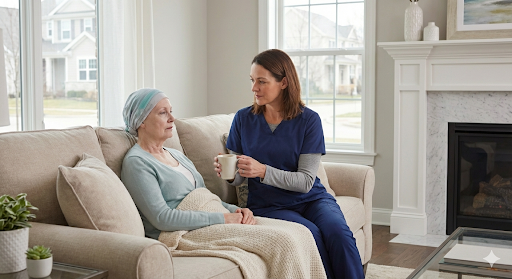
Beyond the physical, the psychosocial dynamics of caregiving are paramount. Cancer treatment can be isolating. The presence of a compassionate caregiver provides not just operational support (housekeeping, medication reminders) but emotional anchoring. This reduces the risk of social isolation, a factor known to negatively impact immune response and overall prognosis.
Operational Excellence in Home Care
At Comfort Angels Home Care, we recognize that cancer care is not static; it fluctuates with "good days" and "bad days."
Our caregivers are trained to adapt to these shifts.
We assist with the operational realities of daily life—getting to appointments, managing distinct dietary needs, and maintaining a sterile, safe environment—so that the family can focus on being loved ones rather than case managers.
Recovering at home allows the patient to rest in a familiar bed, surrounded by memories rather than medical equipment. It transforms the experience from one of clinical endurance to one of supported healing.