In the landscape of geriatric care, malnutrition is often referred to as a "silent epidemic." It is not always a result of a lack of food, but rather a lack of accessible and nutrient-dense food. As physiological maintenance becomes more challenging with age, the body’s ability to absorb nutrients declines, while the energy required to prepare complex meals often exceeds a senior's stamina.
Furthermore, cognitive changes or depression can suppress appetite.
A senior living alone may perceive cooking for one as an unnecessary burden, leading to a reliance on processed, easy-to-eat foods that lack nutritional value ("tea and toast" syndrome).
Learn more about our team: Visit our About Us page to see how we select our compassionate caregivers.
The Physiological Imperative of Hydration
Closely linked to nutrition is the issue of dehydration. As we age, the thirst mechanism in the brain becomes less sensitive.
A senior can be clinically dehydrated without ever feeling thirsty. This state exacerbates confusion, increases the risk of urinary tract infections (UTIs), and can lead to hospitalization.
Strategy
Hydration must be programmatic, not reactive. Having a caregiver who offers water on a schedule is a simple operational change that yields massive health dividends.
Nutrition as a Social Intervention
Food is more than fuel; it is culture and connection. The psychosocial dynamics of eating are profound. Research shows that seniors eat better and more consistently when they are not eating alone.
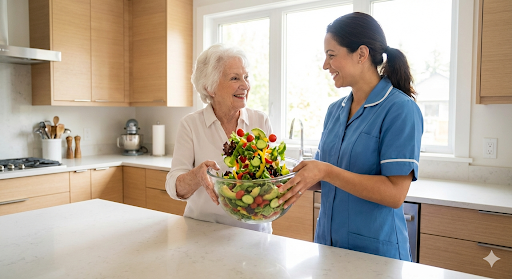
This is where a Comfort Angels Home Care professional makes a significant difference.
Meal Preparation
We prepare fresh, balanced meals tailored to specific dietary restrictions (e.g., low sodium for heart health, soft textures for dysphagia).
Social Engagement
Our caregivers provide companionship during meals, turning a biological necessity into a social event. This combats isolation and encourages appetite.
Key Dietary Focus Areas for Seniors
Protein: Essential for preserving muscle mass and preventing sarcopenia (muscle wasting) which contributes to falls.
Fiber: Vital for digestive health, as the gastrointestinal system slows with age.
Calcium/Vitamin D: Critical for bone density, especially in post-menopausal women.
By outsourcing meal planning and preparation to a professional home care service, families ensure that their loved ones are receiving the "fuel" they need to maintain their independence and cognitive function.