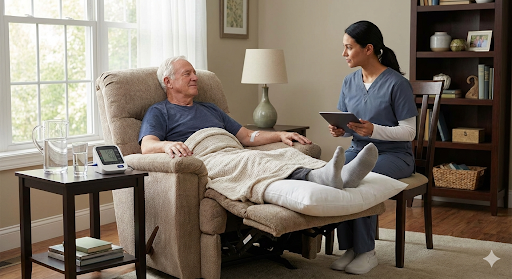
The transition from hospital to home is one of the most vulnerable periods in a senior's healthcare journey. Industry data highlights the "first 72 hours" post-discharge as a period fraught with readmission risks.
The patient leaves the highly monitored environment of the hospital and returns to a setting where, historically, support was informal or non-existent.
However, recovering at home is clinically preferable. It minimizes the risk of nosocomial (hospital-acquired) infections, which are increasingly resistant to antibiotics.
It also reduces "hospital delirium," a state of acute confusion caused by the foreign, noisy, and sleep-depriving environment of a ward.
Explore our full range of support: View our Services tailored for post-surgery care.
Operationalizing Recovery at Home
To make home recovery successful, we must replicate certain aspects of clinical support within the domestic setting.
Wound Care & Hygiene
Surgical sites must be kept clean to prevent infection.
A senior with limited mobility may struggle to bathe safely without wetting a dressing. Professional personal care assistance is essential here.
Managing Mobility and Atrophy
Bed rest is necessary, but prolonged immobility leads to rapid muscle atrophy in seniors. A delicate balance must be struck.
Assisted Mobility
A caregiver can assist with safe transfers (bed to chair) and encourage short, supported walks as prescribed by physical therapy. This prevents blood clots (DVT) and pneumonia without risking a fall.
The Economic and Emotional Trade-off
While hiring home care may seem like an added cost, it must be weighed against the granular analysis of the economic trade-offs of readmission. A return to the hospital due to a fall or infection is costly, both financially and physically.