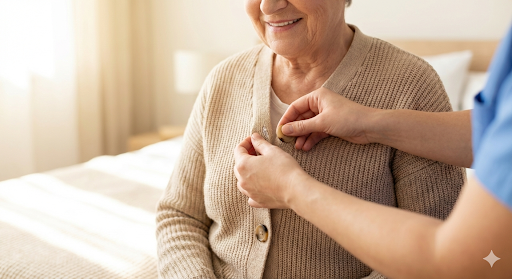
Dignity in Daily Living
The ability to dress oneself is a primary marker of independence. When this ability is compromised—due to the stiffness of arthritis, the tremors of Parkinson’s, or the cognitive apraxia of dementia—it can be a source of profound frustration and embarrassment.
However, maintaining this routine is vital for psychosocial well-being. Getting dressed signifies the start of the day; it is a ritual of self-respect. The goal of home-based geriatric care is to preserve this sense of identity while mitigating the physical struggle.
The Mechanics of Dressing: Overcoming Barriers
For seniors with fine motor control issues, standard clothing is an obstacle course. Buttons are too small; zippers require pincer grips; shoelaces are a trip hazard.
Adaptive Clothing Solutions
The modern ecosystem of senior care includes "adaptive clothing." These are garments engineered to look like traditional clothing but feature Velcro closures, magnetic buttons, or open-back designs that allow for dressing while seated or lying down.
Strategic Dressing
For those with limited range of motion (e.g., after shoulder surgery or stroke), the "weaker side first" rule is essential. A professional caregiver knows to dress the affected limb first and undress it last, reducing strain and pain.
Cognitive Support in Dressing
For seniors with dementia, the barrier is often cognitive rather than physical. A closet full of clothes can be overwhelming (the "paradox of choice").
Limiting Choice
A caregiver can simplify the process by laying out two appropriate options, allowing the senior to exercise autonomy ("Do you want the blue shirt or the red one?") without the anxiety of navigating the whole wardrobe.
Sequencing
A caregiver provides verbal cues or hands items in the correct order (underwear, then pants, then shirt), bridging the gap in executive function.
How Comfort Angels Home Care Helps
At Comfort Angels Home Care, we view personal care not just as a task, but as an interaction that supports dignity.
Helping a client look their best—shaved, hair combed, dressed in clean clothes they like—is a powerful antidepressant. It signals that they are still part of the world, not just patients waiting for the end.